Apr 08, 2026
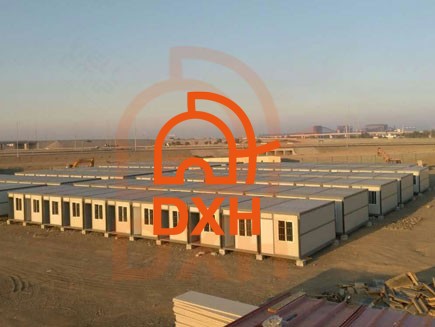
Lorsque la catastrophe a frappé, des milliers de familles ont été contraintes de trouver refuge pour la nuit. La qualité de abri d'urgence en conteneur Il ne s'agit pas seulement de confort, mais aussi de stabilité à long terme. Dans de nombreux camps permanents et temporaires à travers le monde, les abris d'urgence en conteneurs répondent aux besoins des personnes déplacées, et l'étendue de ces besoins demeure très vaste. Chez DXH House, nous concevons et fabriquons des bâtiments modulaires préfabriqués et détachable maisons Spécialement conçues pour les contextes humanitaires, nos unités d'habitation conteneurisées ont été déployées depuis 2008 dans des environnements difficiles au Moyen-Orient et dans des régions reculées de Chine – chaque projet contribuant à l'amélioration des solutions de logement d'urgence. Ce guide explique ce qu'est un abri conteneurisé d'urgence, comment les unités modulaires y répondent, ce que les acheteurs institutionnels doivent rechercher et comment DXH House peut soutenir votre prochain déploiement. Qu'est-ce qu'un abri conteneur d'urgence ? Un abri d'urgence en conteneur Un abri d'urgence est une unité d'habitation ou opérationnelle préfabriquée, construite à partir de conteneurs en acier conformes aux normes ISO et conçue spécifiquement pour un déploiement rapide, temporaire ou semi-permanent en situation de crise. Ces abris d'urgence sont livrés d'usine déjà équipés d'isolation, d'ouvertures pour fenêtres et portes, de conduits électriques, de ventilation et de renforts structurels. Types de configurations d'unités de logement d'urgence Unités d'hébergement d'urgence de 20 et 40 pieds : Ce sont des dimensions courantes pour les unités d'habitation conteneurisées, qui peuvent servir de dortoirs d'urgence pour une, deux, quatre ou six personnes, chacune équipée d'une salle de bain privée.Abri modulaire en conteneurs démontables : Les murs, les planchers et les toits sont fabriqués séparément et expédiés empilés (aucun assemblage requis). Ce mode d'expédition optimise l'utilisation de l'espace.Camps de conteneurs d'urgence : En cas d'afflux massif de personnes, plusieurs conteneurs peuvent être combinés pour former un camp d'hébergement d'urgence temporaire de grande envergure. Ces camps servent à accueillir un grand nombre de réfugiés et peuvent être équipés de réseaux d'approvisionnement en eau, d'assainissement et d'électricité.Logements d'urgence en conteneurs à plusieurs étages pour les sinistrés : Grâce à leur modularité, les conteneurs peuvent être empilés verticalement jusqu'à trois étages pour s'adapter aux espaces restreints. Cette structure nécessite des angles renforcés pour garantir sa stabilité à long terme.Unités sanitaires/de douche individuelles : Conteneurs spécialement équipés d'une douche, d'un lavabo et toilettes. Tous ces abris conteneurisés d'urgence peuvent être configurés comme suit : Cloisons internes : Des cloisons peuvent être installées pour organiser l'intérieur par sexe, famille ou fonction, créant ainsi des espaces tels que des pièces à vivre, des salles de bains, des salles d'examen et des bureaux.Isolation et CVC : Améliorez les matériaux d'isolation ou les systèmes de chauffage, ventilation et climatisation (CVC) en option pour assurer le confort dans les environnements extrêmement froids ou chauds.Raccordements rapides aux services publics : Les systèmes électriques et de plomberie sont généralement préinstallés pour plus de commodité (prêts à l'emploi). Si vous souhaitez obtenir des informations plus détaillées sur l'une des configurations d'abris conteneurisés d'urgence, Contactez notre équipe commerciale pour les spécifications détaillées du produit. Pourquoi les maisons modulaires en conteneurs sont le choix idéal pour les abris de campement d'urgence Déploiement rapide : Les logements d'urgence modulaires peuvent être transportés et installés en 24 à 48 heures, surpassant de loin la rapidité des méthodes de construction traditionnelles.Performance structurelle durable : Les maisons conteneurs d'urgence DXH House sont dotées d'une structure en acier Q235 haute résistance combinée à des panneaux sandwich isolés (EPS ou laine de roche), ce qui leur confère une intégrité structurelle comparable à celle des maisons traditionnelles tout en offrant un confort optimal.Logistique optimisée : Nos unités d'habitation modulaires sont conçues pour accueillir 7 à 8 unités standard dans un conteneur high-cube de 20 pieds et 17 à 18 unités standard dans un conteneur high-cube de 40 pieds, réduisant ainsi les coûts de transport pour les abris d'urgence.Configuration modulaire flexible : Les camps de conteneurs d'urgence peuvent être connectés horizontalement ou empilés verticalement, permettant une grande variété de configurations : maisons individuelles, dortoirs multi-logements, postes médicaux, centres communautaires et installations administratives.Facile à déplacer et à réutiliser : Chaque unité d'hébergement d'urgence est entièrement démontable et l'infrastructure des abris peut être déplacée lors des opérations de secours en cas de relocalisation nécessaire ou une fois la crise passée. Cette approche est parfaitement conforme à la philosophie du HCR qui vise à promouvoir la construction d'infrastructures humanitaires durables et réutilisables.Logements durables : Les conteneurs aménagés en logements d'urgence offrent une alternative abordable et peuvent être réutilisés plusieurs fois à différents endroits, réduisant ainsi les coûts et minimisant les déchets.Sécurité et confidentialité : Comparée aux tentes temporaires, sa structure robuste offre une sécurité et une intimité accrues, créant un environnement plus stable et plus humain pour les réfugiés et les personnes déplacées. Comparaison des types d'abris d'urgence TaperCostume pourLimitesTentes en toileIntervention d'urgence initiale de 72 heuresDurée de vie limitée, isolation médiocre, faible intimitéAbri de transitionPhase post-urgence, 1 à 3 ansMain-d'œuvre intensive, qualité variable, difficile à mettre à l'échelle rapidementUnités de conteneurs modulairesPhases d'urgence et à long termeNécessite un accès routier pour la logistique des transports Les logements modulaires DXH House répondent aux besoins des phases d'urgence et de stabilisation lors de déplacements de population, réduisant ainsi les coûts liés à la transition d'un type d'abri à un autre en fonction de l'évolution des besoins. Commandez dès maintenant votre maison conteneur d'urgence personnalisée chez DXH House ! DXH House en pratique : une expérience de déploiement réelle Nos bâtiments modulaires ont été conçus pour répondre à des conditions qui reflètent fidèlement les exigences du déploiement de camps humanitaires. Dans les régions chinoises du Xinjiang et du Yunnan, notre maisons modulaires en conteneurs ont été déployées comme dortoirs pour les travailleurs sur des terrains de haute altitude et à activité sismique, réduisant de moitié le temps de construction par rapport à la construction conventionnelle tout en maintenant l'intégrité structurelle malgré des hivers rigoureux. Lors des urgences sanitaires mondiales, les conteneurs d'urgence DXH House ont été adaptés pour servir d'installations d'isolement et de dortoirs médicaux à réponse rapide, démontrant ainsi la flexibilité du système pour passer rapidement d'une configuration résidentielle à une configuration fonctionnelle. À quoi s'attendre en travaillant avec DXH House Tous les éléments structuraux modulaires préfabriqués des maisons DXH sont fabriqués selon des processus de gestion de la qualité certifiés ISO 9001. Nos matériaux principaux bénéficient de la certification CE, garantissant leur conformité aux normes de sécurité exigées par de nombreux programmes d'approvisionnement humanitaire. Nous avons une solide expérience en matière d'expédition à travers l'Afrique, le Moyen-Orient, l'Asie du Sud et l'Asie du Sud-Est. Notre équipe propose des plans d'aménagement de camps d'urgence optimisant la densité, la circulation et le zonage fonctionnel. Nous réalisons des rendus 3D à partir des paramètres de votre site afin que les équipes d'approvisionnement puissent visualiser la solution avant de s'engager. Notre assistance ne s'arrête pas à la livraison. Nous fournissons une documentation technique pour l'installation ainsi qu'une assistance vidéo à distance pour résoudre tout problème survenant lors du fonctionnement de l'appareil. Pour certains projets d'envergure, nous proposons une assistance à l'installation sur site. Pour garantir l'exactitude de votre demande, veuillez inclure l'utilisation prévue du produit, les quantités souhaitées et les délais de livraison. Nous comprenons les réalités opérationnelles des déploiements humanitaires et sommes prêts à vous accompagner dans votre projet, de la planification initiale à l'installation finale. Contactez l'équipe commerciale de DXH House par courriel à james@dxprefabhouse.com ou via WhatsApp/WeChat au +86 13812721485. Foire aux questions En quoi les conteneurs d'hébergement d'urgence modulaires se comparent-ils aux tentes traditionnelles ? Bien que le coût initial des tentes soit relativement faible, leur coût total de possession est nettement plus élevé si l'on tient compte de facteurs tels que les cycles de remplacement, l'entretien et les rachats répétés. Si les logements d'urgence modulaires nécessitent un investissement initial plus important, leur durée de vie prévue de plus de 20 ans et le fait qu'ils soient déplacés plutôt que mis au rebut en font une solution plus rentable. Les abris conteneurisés d'urgence peuvent-ils être adaptés à différents contextes culturels ? Nous proposons des services de personnalisation complets, allant des plans d'étage à l'agencement des salles de bains et des cuisines, en passant par l'emplacement des fenêtres, l'orientation de l'entrée et les finitions extérieures. Pour les logements, nous concevons des agencements adaptés aux familles multigénérationnelles et proposons des solutions d'intimité adaptées à chaque sexe et respectueuses des normes culturelles locales. Quel est le délai entre la commande et la livraison ? Les délais de livraison varient en fonction du volume de la commande, de la destination et des exigences de personnalisation. Nous vous recommandons de nous consulter dès que possible lors de la phase de planification. Lors de cette consultation, notre équipe vous fournira un calendrier de production et de logistique adapté à votre projet. Les habitations conteneurisées d'urgence conviennent-elles à un hébergement de campement à long terme ou permanent ? Bien qu'elles soient classées comme des structures préfabriquées plutôt que permanentes, les unités conteneurisées DXH House sont conçues pour une durée de vie de plus de 20 ans lorsqu'elles sont correctement entretenues. Comment les ONG et les agences gouvernementales initient-elles généralement un processus d'approvisionnement ? Nous recueillerons les paramètres du projet, notamment l'emplacement, la taille de la population, le calendrier, le budget et les exigences de conformité spécifiques. Nous élaborerons ensuite une proposition préliminaire comprenant les plans d'aménagement des unités, les plans logistiques et les prix de référence.
EN SAVOIR PLUS





 Réseau IPv6 pris en charge